Best Toys for 3 Year Old in Bangladesh: 6 Educational Toys That Build Focus, Memory, and Creativity
Oct 28, 2026 . Shahriar Obayed
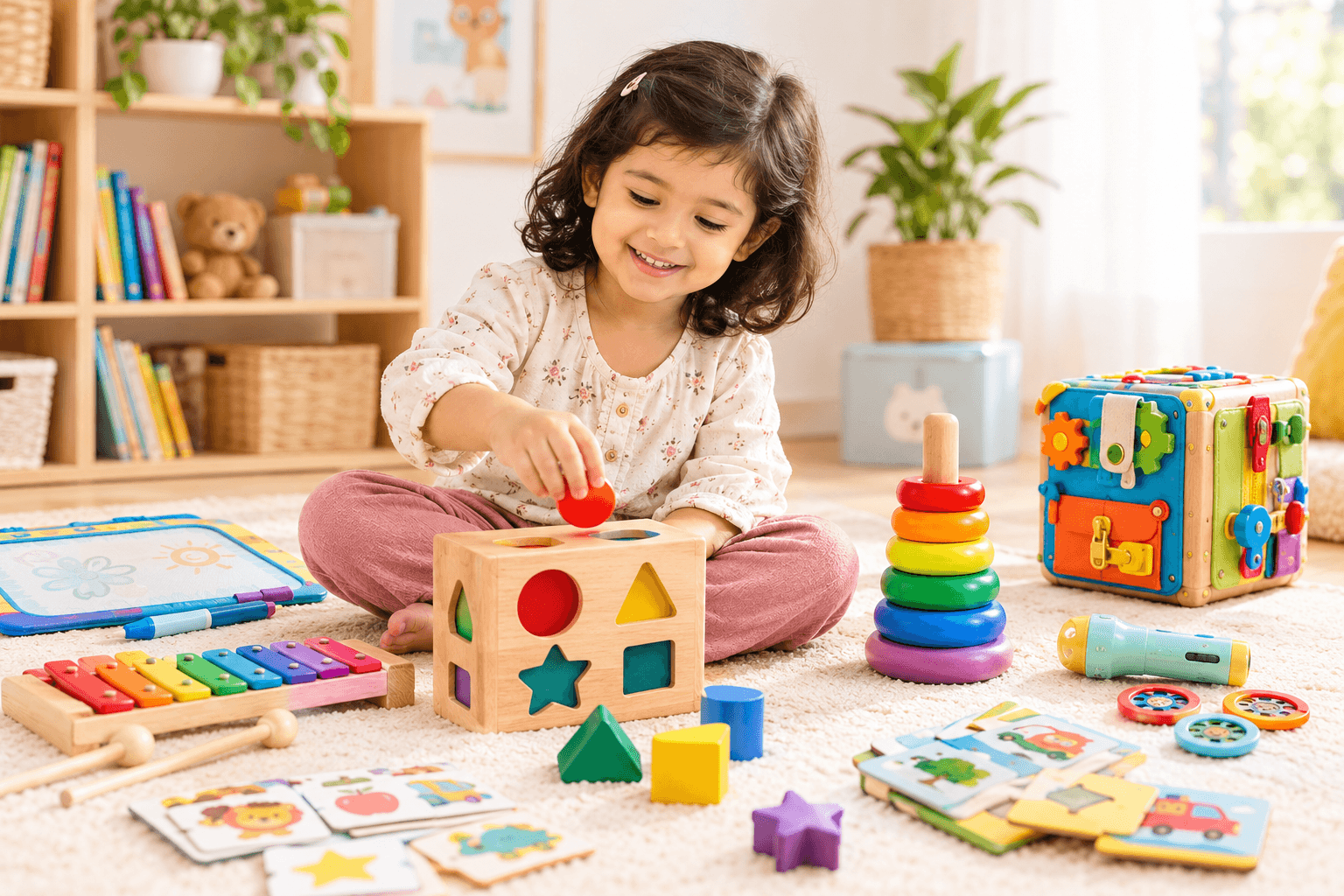
What if your child's playtime could become the foundation for a lifetime of learning? At three years old, children are curious explorers. They ask questions, create imaginary worlds, recognise familiar patterns, and begin solving simple problems independently. The right toys can turn this natural curiosity into meaningful opportunities to learn.
Choosing the best toys for 3 year old in Bangladesh means finding products that encourage children to think, create, remember, and explore. Instead of choosing toys solely because they look attractive or make exciting sounds, parents can look for activities that support creativity, hand-eye coordination, early reasoning, and concentration through hands-on play.
However, finding the best toys for 3 year old in Bangladesh can be challenging when so many products promise educational benefits. Should you choose a puzzle, a drawing toy, a musical instrument, or a sensory activity? The answer depends on your child's interests, abilities, and developmental stage.
At BrainyBox, parents can explore a range of educational toys designed to make everyday play more engaging. In this guide, we introduce six toy options, explain the skills they can encourage, and share practical tips for helping your preschooler develop confidence before starting school.
If you're searching for the best toys for 3 year old in Bangladesh, this guide will help you make a more informed choice without filling your home with unnecessary toys.
What Skills Do Three-Year-Olds Develop Through Play?
Between three and four years old, children experience important changes in communication, movement, imagination, and social interaction. Every child develops at their own pace, so toys should encourage exploration rather than create pressure to achieve milestones by a particular age.
Here are some of the abilities that suitable play activities can help children practise.
1. Memory and Recognition
Matching games, picture cards, and simple puzzles encourage children to observe details, recognise familiar images, and remember where objects belong.
As children become familiar with an activity, parents can introduce slightly more challenging variations.
2. Focus and Concentration
A child may spend time completing a puzzle, drawing a picture, or exploring an activity cube. These experiences provide opportunities to practise attention and persistence.
Concentration develops gradually. Some children enjoy longer activities, while others prefer shorter sessions with frequent breaks.
3. Creativity and Imagination
Drawing, music, storytelling, and open-ended play allow children to express ideas in different ways.
A blank drawing surface might become a house, a garden, or an imaginary animal. The opportunity to make independent choices is often more valuable than producing a perfect result.
4. Early Mathematical Thinking
Sorting, matching, and stacking introduce concepts such as size, shape, sequence, comparison, and pattern.
Children can explore these ideas naturally while playing, without needing formal lessons.
5. Fine Motor Coordination
Turning cards, holding a drawing tool, manipulating puzzle pieces, and striking musical keys involve controlled hand movements.
These activities give children opportunities to practise coordination and prepare for everyday tasks such as drawing, handling utensils, and using simple learning materials.
6. Communication and Social Skills
Playing with a parent, sibling, or friend creates opportunities to describe objects, ask questions, follow simple rules, and practise taking turns.
These everyday interactions can make playtime both educational and emotionally rewarding.
Top 6 Best Toys for 3 Year Old in Bangladesh
The most useful educational toys encourage children to participate actively. They give preschoolers opportunities to experiment, make decisions, and discover what happens when they try something new.
Here are six BrainyBox products worth exploring.
1. Water Doodle Mat: Encourage Mess-Free Creativity
Price reference: ৳950
Creative activities can help preschoolers explore colours, shapes, movement, and imagination.
A water doodle mat provides a reusable surface for drawing with water using the appropriate supplied applicator. Children can make marks, experiment with different movements, and watch their creations gradually disappear as the surface dries.
Unlike traditional paper drawing, a reusable mat offers opportunities to repeat the activity without constantly replacing sheets of paper.
Explore the BrainyBox Water Doodle Mat to check the product details.
Skills it can encourage:
Early drawing and mark-making.
Hand-eye coordination.
Creative expression.
Visual exploration.
Controlled hand movements.
Try this at home: Ask your child to draw a circle, a straight line, or a picture of their favourite animal. Draw your own picture beside theirs and invite them to describe what they see.
There is no need to correct every line. Encourage your child to experiment and enjoy the process.
Why parents may like it: Reusable drawing activities can make creative play easier to organise, particularly when you want to avoid traditional paint and ink.
Always check the product's recommended age, materials, and cleaning instructions before use.
2. Matching Card: Make Memory Games Enjoyable
Price reference: ৳380
Matching games encourage children to pay attention to visual details and recognise similarities between pictures.
A simple card activity can begin with identifying identical images. As your child becomes more comfortable, you can introduce a memory-style game in which players try to remember where matching cards are placed.
Explore the BrainyBox Matching Card to learn more about this option.
Skills it can encourage:
Visual recognition.
Memory practice.
Attention to detail.
Early classification.
Turn-taking during shared play.
Try this at home: Start with a small selection of matching pairs and place the cards face up. Ask your child to find two pictures that look alike.
When the activity becomes familiar, try turning the cards over and taking turns finding pairs. Use fewer cards initially if your child finds remembering their positions difficult.
Why it matters: Matching activities offer opportunities to practise observation and recall while spending time together.
Remember that children differ in their attention and memory abilities. Keep the game enjoyable rather than treating it as a test.
3. Busy Cube: Explore Different Activities in One Toy
Price reference: ৳1,900
Some children enjoy exploring objects, moving components, and discovering how different mechanisms work.
A multi-activity cube can offer several kinds of hands-on exploration in one product. Depending on its design, an activity cube may include moving pieces, turning components, or simple fastening mechanisms.
The BrainyBox Busy Cube is an option to consider if your child enjoys interactive activities.
Skills it can encourage:
Fine motor coordination.
Hand-eye coordination.
Exploration and experimentation.
Simple problem-solving.
Persistence with unfamiliar tasks.
Try this at home: Let your child choose one activity on the cube. Demonstrate how it works if needed, then give them time to experiment independently.
You can ask simple questions such as, "What happens when you turn it?" or "Can you move that piece the other way?"
Why parents may like it: A multi-activity toy offers different ways to explore without requiring several separate products.
However, a more complicated toy is not automatically better. Check the recommended age, the construction of each component, and the manufacturer's safety instructions before allowing your child to use it.
4. Puzzle Graphic Cognitive Cards: Introduce Patterns and Logic
Price reference: ৳380
Preschoolers are beginning to notice relationships between objects, recognise familiar patterns, and work through simple challenges.
Picture-based cognitive cards can provide opportunities to compare images, identify similarities, and explore visual relationships.
Discover the BrainyBox Puzzle Graphic Cognitive Cards to review the available product information.
Skills it can encourage:
Visual observation.
Pattern recognition.
Categorisation.
Early reasoning.
Attention to detail.
Try this at home: Choose a card with a visual challenge and ask your child to look carefully at the pictures.
Rather than immediately explaining the answer, encourage them to describe what they notice. Questions such as "Which pictures look alike?" or "What do you think comes next?" can make the activity more interactive.
Why it matters: Simple visual challenges give children opportunities to compare information and explain their thinking.
Choose activities that suit your child's current abilities. If a challenge causes frustration, simplify it or return to it another day.
5. Wooden Xylophone: Build Rhythm Through Music
Price reference: ৳330
Music can turn ordinary playtime into an opportunity for listening, movement, and creative expression.
At three years old, children may enjoy experimenting with different notes, copying simple rhythms, and making up their own musical patterns.
The BrainyBox Wooden Xylophone offers a way to introduce musical exploration through active play.
Skills it can encourage:
Listening and sound recognition.
Rhythm exploration.
Hand-eye coordination.
Pattern imitation.
Creative expression.
Try this at home: Tap two or three notes in a simple rhythm and invite your child to copy the pattern.
You can also sing familiar songs together or take turns creating short musical sequences.
Let your child experiment with different sounds instead of expecting them to play a tune perfectly.
Why parents may like it: A musical instrument can offer repeated opportunities for creative play as a child becomes more confident.
Before purchasing, check the manufacturer's age recommendation, the security of any mallet or other accessories, and the durability of the instrument.
6. Writing Board: Prepare for Early Writing and Drawing
Price reference: ৳475
At three years old, many children enjoy making increasingly deliberate marks. They may attempt circles, straight lines, simple shapes, or pictures representing familiar people and objects.
A reusable writing board gives children a surface for experimenting without the pressure of getting every drawing right.
Explore the BrainyBox Writing Board for more information.
Skills it can encourage:
Early mark-making.
Fine motor coordination.
Visual-motor practice.
Creative expression.
Confidence through repeated attempts.
Try this at home: Invite your child to draw a house, a flower, or a smiling face. If they need help, demonstrate one simple shape and let them continue in their own way.
You can also ask them to tell you a story about the picture they create.
Why it matters: Drawing gives children opportunities to practise controlling their movements while expressing ideas visually.
Keep activities relaxed and age-appropriate. At this stage, children do not need to master formal handwriting or produce perfect letters.
Prices above are based on the supplied product information and may change. Check each product page for current pricing, availability, materials, and recommended age before purchasing.
School Readiness: What Can Educational Toys Help Children Practise?
Starting school involves more than recognising letters and numbers. Children also benefit from opportunities to communicate, manage simple tasks, explore independently, and interact with others.
Age-appropriate toys can provide informal practice with some of these skills.
Skill
Suitable Play Activity
What Children Can Practise
Early drawing
Water Doodle Mat or Writing Board
Making marks and controlling hand movements
Memory and recognition
Matching Card
Identifying similarities and remembering pictures
Fine motor coordination
Busy Cube
Moving and manipulating components
Visual reasoning
Puzzle Graphic Cognitive Cards
Comparing images and recognising patterns
Listening and rhythm
Wooden Xylophone
Following and creating simple sound patterns
Communication
Shared games and drawing
Describing ideas and answering questions
Social interaction
Taking turns with a matching game
Waiting, sharing, and playing cooperatively
These activities are opportunities for practice, not guarantees of school readiness. Children develop at different rates, and supportive relationships, conversation, reading, movement, and everyday experiences are also important.
How Much Playtime Does a Three-Year-Old Need?
Play should be a regular part of a preschooler's day, but there is no single number of minutes that every child must spend with educational toys.
Instead of forcing a long session, offer a variety of activities and allow your child's interests and energy levels to guide the experience.
You can build play into everyday routines through:
Creative play: Offer drawing materials or a water doodle mat and let your child explore different marks.
Memory games: Spend a few minutes matching pictures or identifying familiar objects.
Music and movement: Sing songs, tap rhythms, and encourage your child to move to the music.
Building and problem-solving: Provide suitable toys that encourage sorting, stacking, or experimenting.
Outdoor exploration: Give your child opportunities to move, notice nature, and investigate the environment.
Shared reading: Read picture books together, ask questions, and encourage your child to describe what they see.
A mixture of independent exploration and interaction with caregivers can make playtime varied and rewarding.
How to Choose Safe Educational Toys in Bangladesh
Before purchasing a toy, consider more than its appearance or advertised educational benefits.
Check the Recommended Age
Choose products that are appropriate for your child's developmental stage. A toy intended for older children may include components or activities that are unsuitable for a three-year-old.
Inspect the Construction
Look for secure components, smooth edges, durable materials, and clear product instructions. Avoid toys that are damaged or have loose parts that could create a safety risk.
Be Careful With Small Components
Children under three are particularly vulnerable to choking hazards, but older toddlers and preschoolers still require appropriate supervision.
Check the size of individual components and any accessories. Keep small pieces away from children who may put them in their mouths.
Consider Cleaning and Maintenance
Toys used regularly should be practical to maintain. Follow the manufacturer's cleaning instructions, particularly for toys that involve water, shared use, or frequent handling.
Choose Activities Your Child Enjoys
A toy's educational potential is only useful when it provides an activity your child can engage with.
Some children prefer music, others love drawing, and some enjoy puzzles or moving objects. Follow your child's interests when building a collection.
Where to Buy Educational Toys for Three-Year-Olds in Bangladesh
Parents looking for educational toys can compare products according to their intended use, materials, price, and recommended age.
BrainyBox offers a range of toys and activities for young children.
Start with the BrainyBox online shop to explore the available collection.
You can also browse the toys for children aged three to four category for additional options. Check the recommended age on each individual product before purchasing, as children develop at different rates and category labels may cover a broader age range.
When comparing products, consider:
The skills and activities the toy encourages.
Whether the recommended age matches your child.
The quality and safety of its components.
The current price and product availability.
Cleaning requirements and storage.
Delivery arrangements for your location.
A thoughtful selection of suitable toys can provide plenty of opportunities for learning without requiring a large collection.
Frequently Asked Questions About Toys for Three-Year-Olds
What are the best toys for a three-year-old in Bangladesh?
Suitable options may include drawing boards, matching games, musical instruments, age-appropriate puzzles, and multi-activity toys. The best choice depends on your child's interests, developmental stage, and the safety of the product.
Which toys help develop memory in preschoolers?
Matching games and picture-based activities can encourage children to recognise images, compare details, and practise remembering information. Start with simple activities and increase the difficulty gradually.
Which toys help children prepare for school?
Drawing activities, puzzles, sorting games, musical toys, and shared reading can provide opportunities to practise coordination, problem-solving, communication, and creative expression. School readiness also depends on social experiences, everyday routines, and individual development.
Are screen-free toys useful for three-year-olds?
Screen-free toys can encourage hands-on exploration, movement, creativity, and interaction with other people. Drawing, music, matching games, and suitable puzzles are examples of activities that can be enjoyed without a screen.
How many educational toys should a three-year-old have?
There is no required number. A small selection of safe toys offering different kinds of play can be sufficient. Rotating activities and finding new ways to use familiar toys can keep play interesting.
Where can I buy toys for three-year-olds online in Bangladesh?
Visit the BrainyBox online shop to browse the available collection. Check product descriptions for current prices, age recommendations, and safety information before ordering.
Contact BrainyBox: Make Learning Part of Every Playful Day
Your child does not need expensive gadgets or a room full of toys to develop important skills. A simple drawing activity, a matching game, or a musical instrument can create opportunities to explore, experiment, and express new ideas.
When choosing the best toys for 3 year old in Bangladesh, focus on products that encourage active participation, suit your child's age, and make learning enjoyable.
Explore the BrainyBox online shop to discover toys and activities for your preschooler's next stage of development.
For trusted guidance on preschool development, age-related milestones, and supporting young children, visit HealthyChildren.org from the American Academy of Pediatrics.
Every little discovery matters. Give your child the freedom to play, the confidence to explore, and the opportunity to learn something new every day.