
Choosing Safe Play: Non‑Toxic Baby Toys in Bangladesh
Oct 27, 2026 . Shahriar Obayed
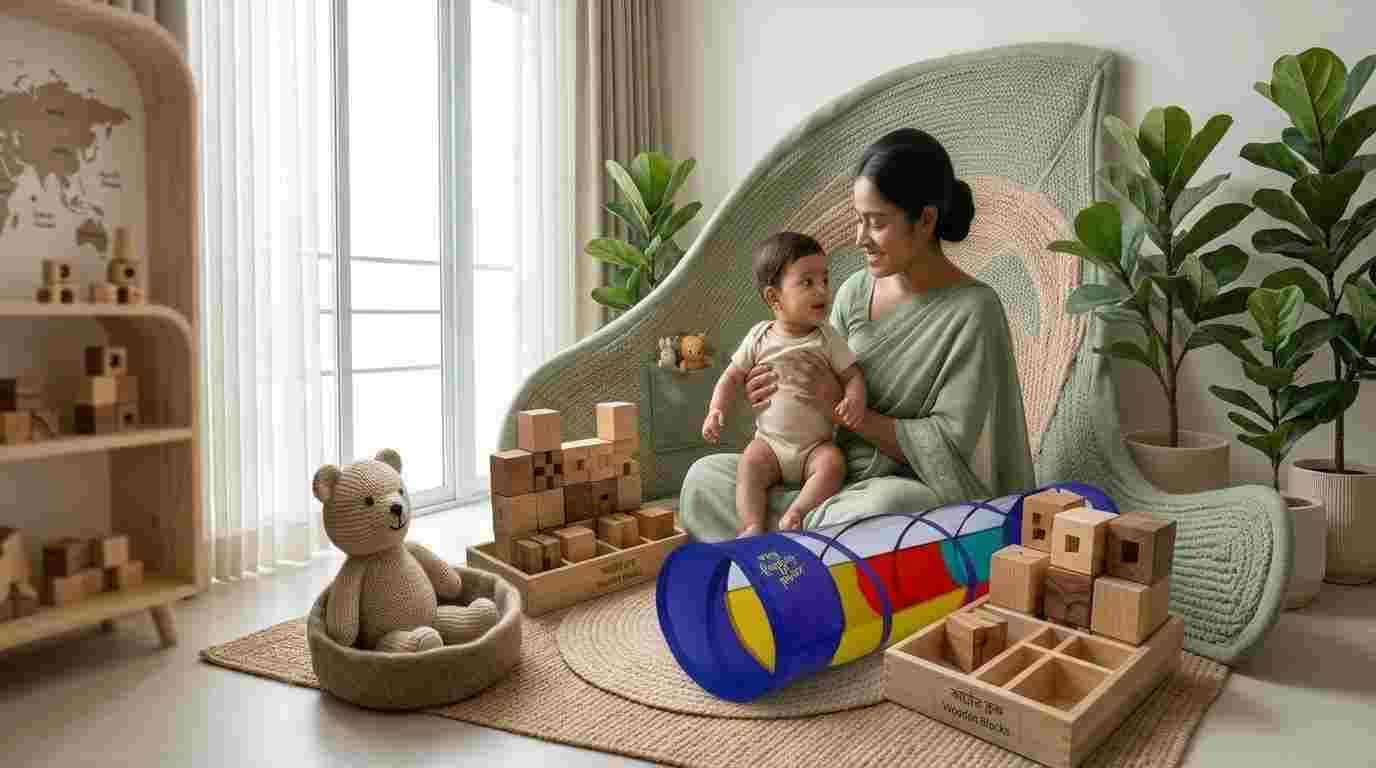
Choosing toys for your baby should be an enjoyable experience, but safety always comes first. When exploring non-toxic baby toys in Bangladesh, parents should consider materials, age suitability, product quality, and the possibility of small parts or harmful substances. Bangladesh's warm, humid climate also makes proper toy cleaning and storage important.
At BrainyBox, parents can explore our baby and children's toys to discover options for different stages of childhood. Before making a purchase, you can shop baby toys online and compare products according to your child's needs. You can also discover toys by age to narrow down suitable options.
Understanding how to choose non-toxic baby toys in Bangladesh means looking beyond attractive colours and packaging. Parents should consider the materials, construction, age recommendations, and available safety information. This guide explains how to identify potentially safer toys, what materials to look for, and how to maintain a clean and comfortable play environment for your little one.
Why Are Non-Toxic Baby Toys Important?
Babies explore the world through touch, movement, and sometimes mouthing objects. This makes toy selection particularly important during the first years of life.
Choosing well-made toys with appropriate materials and age recommendations can help parents reduce avoidable risks while providing opportunities for safe, enjoyable play.
1. Reducing Exposure to Potentially Harmful Substances
Some toys may contain chemicals of concern, depending on their materials, manufacturing processes, coatings, and intended use.
Parents may encounter discussions about substances such as:
Lead: A toxic metal that can be present in certain paints or materials. Exposure can be harmful, particularly to young children.
Phthalates: A group of chemicals used in some plastics to make them more flexible. Certain phthalates are restricted in children's products in some markets.
BPA: A chemical used in the production of some plastics and resins. Its presence depends on the material and manufacturing process.
Formaldehyde: A chemical that may be associated with certain resins, adhesives, and treated materials.
The presence of a chemical cannot be determined reliably from a toy's appearance, smell, or price alone. Parents should choose products from responsible sellers, review available product information, and avoid toys with unclear material descriptions or questionable construction.
A toy described as non-toxic should not automatically be assumed to be free from every potentially harmful substance. Look for credible safety documentation where available.
2. Supporting Comfortable and Enjoyable Play
Babies need opportunities to explore objects, textures, sounds, and movement. Toys that are suitable for their age can support these experiences while helping parents feel more confident about playtime.
When selecting a toy, consider whether it:
Is designed for your baby's current developmental stage.
Has securely attached components.
Has no accessible sharp edges or dangerous points.
Can be cleaned according to the manufacturer's instructions.
Uses clearly described materials.
Has appropriate warnings and age recommendations.
Remember that even a well-made toy requires supervision and regular inspection.
Best Materials to Consider When Choosing Baby Toys
Different materials have different advantages and limitations. Rather than assuming one material is always safer than another, evaluate the finished product, its construction, and its suitability for your baby.
1. Organic Cotton and Other Soft Fabrics
Soft fabric toys can be suitable for supervised play, sensory exploration, and interactive activities when they are designed for the child's age.
When considering cotton or other fabric toys, check for:
Secure seams and stitching.
Firmly attached decorative elements.
No loose buttons, beads, or other small parts.
Clearly described fabric and filling materials.
Colouring and finishes suitable for the intended use.
Washing instructions that are easy to follow.
Organic cotton may be appealing to parents who prefer particular farming and processing practices. However, an organic label alone does not establish that the finished toy is free from every chemical concern or mechanical hazard.
Parent tip: Check fabric toys after washing. Loose stitching, exposed filling, or damaged seams can create new hazards.
2. Natural Wood
Wooden blocks, stacking rings, and simple puzzles can encourage grasping, coordination, and imaginative play.
Before choosing wooden toys, inspect the finish and construction carefully.
Look for:
Smooth surfaces without splinters.
Securely attached components.
No cracks or damaged edges.
Finishes and coatings appropriate for children's toys.
Suitable dimensions for the child's age.
Clear product and manufacturer information.
Do not assume that untreated wood is automatically safer. Wood quality, manufacturing, surface treatment, and construction all matter.
For babies who mouth their toys, avoid wooden pieces that can splinter, break, or release small components.
3. Natural Rubber and Silicone
Rubber and silicone are used in various teethers, sensory toys, and bath products. Their suitability depends on the material formulation, manufacturing quality, design, and intended use.
When choosing a teether or a toy made from these materials, check that:
The product is specifically intended for your child's age.
The material is clearly identified.
The toy has no cracks, tears, or damaged sections.
No small components can detach.
The manufacturer's cleaning instructions are available.
The product is intended for mouthing if your baby will chew it.
A label such as "food-grade silicone" should not be treated as proof that every finished toy is safe in every situation. Likewise, natural rubber is not automatically suitable for every child or every use.
Always follow the manufacturer's instructions, especially for products intended for teething.
4. Plastic Toys
Plastic toys are not automatically unsafe. Their suitability depends on the plastic, product design, manufacturing quality, intended age group, and applicable safety requirements.
If you choose a plastic toy, look for a reputable manufacturer, clear product information, age recommendations, and relevant safety documentation.
Avoid toys with strong chemical odours, damaged surfaces, sharp edges, loose pieces, or uncertain origins. A strong smell alone cannot identify a particular chemical, but it is a sensible reason to stop using a questionable product and seek more information.
How to Identify Safer Baby Toys in Bangladesh
Finding a suitable toy involves more than looking for the words "safe" or "non-toxic" on a package.
Use the following checks before buying.
1. Read the Product Label Carefully
Look for the manufacturer's or importer's information, recommended age, material description, care instructions, and relevant safety warnings.
Be cautious when a product makes broad claims such as "100% chemical-free" without explaining what that means or providing supporting evidence.
No material can reasonably be assumed to be free of every chemical. More useful information identifies the material, its intended use, and the safety requirements the product is designed to meet.
2. Check Relevant Safety Standards
Depending on the product and market, you may encounter references to standards such as:
EN 71: A series of European standards covering different aspects of toy safety.
ASTM F963: A US toy safety standard covering various requirements for toys.
ISO 8124: An international series of standards addressing toy safety.
These references can help parents understand a product's stated safety requirements. However, seeing a standard mentioned on a website or package does not independently prove that the specific toy has been tested or complies with every applicable requirement.
Where possible, look for credible documentation identifying the product, manufacturer, applicable standard, and relevant test or conformity information.
Requirements may differ according to the product and the market in which it is sold. If you are unsure about a particular toy, ask the seller for supporting documentation rather than relying on an unfamiliar symbol.
3. Be Careful With Certification Claims
Do not assume that every logo, stamp, or phrase on toy packaging represents an official certification.
If a seller claims that a product has been certified, ask what the certification covers and which organization issued it. Where documentation is available, check whether it applies to the actual product rather than merely to a material or another product from the same brand.
This is particularly important when purchasing imported toys or products from unfamiliar online sellers.
4. Choose Reputable Sellers
When shopping for baby toys in Bangladesh, consider whether the seller provides:
Clear product descriptions.
Accurate age recommendations.
Material and care information.
Manufacturer or importer details where available.
A way to ask questions about product safety.
Clear purchase and return policies.
A professional-looking website or attractive packaging is not proof of product safety. Consider the available evidence before making a decision.
BrainyBox Toy Ideas for Developmental and Sensory Play
Different toys can offer different play experiences. The most suitable choice depends on your child's age, abilities, interests, and the product's construction.
Explore the BrainyBox collection to compare available options, and review the details of each product before purchasing.
1. Stacking and Building Toys
Age-appropriate stacking toys can encourage babies to reach, grasp, release, and explore how objects fit together.
When selecting stacking blocks or rings, consider:
Whether the pieces are suitable for your child's age.
Whether any component could present a choking hazard.
Whether the materials and finishes are clearly described.
Whether the toy is sturdy enough for its intended use.
For babies who put objects in their mouths, avoid small blocks and other pieces that can fit entirely into the mouth.
2. Fabric Activity Toys
Fabric activity cubes and soft sensory toys may introduce babies to different textures, colours, and simple interactive features.
Before purchasing, check that mirrors, ribbons, tags, and other attached elements are securely constructed and suitable for the intended age group.
Follow the care instructions and inspect the toy regularly for loose stitching or exposed filling.
3. Sensory Balls
Age-appropriate sensory balls can encourage reaching, grasping, rolling, and movement.
Choose a size and design suitable for your baby's developmental stage. Avoid products with detachable parts, weak seams, or openings that could trap fingers.
If a sensory ball is intended for mouthing, verify the manufacturer's instructions rather than assuming that every soft or flexible ball is suitable as a teether.
4. Musical and Sound Toys
Simple musical toys can introduce babies to different sounds and encourage interaction with caregivers.
Look for securely enclosed components, suitable sound levels, and reliable construction. For battery-operated toys, ensure that the battery compartment is securely fastened and cannot be opened easily by a child.
Do not assume that a wooden musical toy is automatically safe simply because it uses a natural material. The finish, size, construction, and sound-producing components also matter.
Important: Product names and examples above describe general toy categories, not verified claims about the materials, certifications, or current stock of individual BrainyBox products. Always check the relevant product listing before purchasing.
How to Choose Baby Toys According to Age
A toy that is suitable for an older child may not be appropriate for a baby. Always follow the manufacturer's age recommendations and consider your child's individual abilities.
Newborns to 3 Months
At this stage, babies are beginning to respond to visual and auditory experiences.
Parents may consider age-appropriate high-contrast visual toys and simple sensory experiences with a caregiver.
Check that any toy used near a newborn is designed for that purpose. Keep loose objects out of the baby's sleep space.
3 to 6 Months
Babies often become more interested in reaching, touching, and grasping.
Suitable options may include securely constructed soft toys, age-appropriate rattles, and simple sensory toys.
Avoid toys with loose parts or components that could detach when pulled or chewed.
6 to 12 Months
As babies develop greater mobility, they may enjoy reaching for toys, transferring objects between hands, and exploring simple cause-and-effect activities.
Age-appropriate stacking toys, larger sensory objects, and simple interactive toys may provide opportunities for supervised exploration.
Check carefully for choking hazards, particularly as babies become more mobile and explore objects with their mouths.
12 Months and Older
Toddlers may begin exploring more complex stacking, sorting, pretend-play, and problem-solving activities.
Choose toys that match the child's abilities and remain alert to small components, magnets, button batteries, and other hazards.
Age labels are useful starting points, but supervision and the child's individual developmental stage remain important.
How to Maintain a Safe Play Environment in Bangladesh
Bangladesh's warm, humid conditions can make moisture control and toy cleaning especially important. Proper care can help keep toys in good condition and reduce problems associated with damp storage.
1. Inspect Toys Regularly
Check toys for:
Cracks and broken pieces.
Loose stitching or exposed filling.
Peeling paint or damaged coatings.
Loose batteries or battery covers.
Sharp edges or splinters.
Signs of mould or persistent dampness.
Stop using a toy if it becomes damaged or develops a hazard that cannot be corrected safely.
2. Clean Toys According to the Instructions
Different materials require different cleaning methods.
Wash fabric toys according to their care labels. Clean hard toys using the manufacturer's recommended method, and make sure they dry completely before returning them to your baby.
Avoid using harsh cleaning products unless they are specifically appropriate for the toy and its intended use.
3. Store Toys in a Dry, Well-Ventilated Place
Humidity can contribute to mould growth when toys remain damp.
After washing, allow toys to dry completely. Store them in a clean, dry area with adequate ventilation rather than leaving damp fabric toys in closed containers.
Inspect toys periodically, especially during the rainy season.
4. Replace Damaged Toys
A toy that was suitable when purchased may become unsafe after repeated use.
Replace toys with cracked parts, exposed filling, damaged coatings, loose components, or other defects that could endanger your child.
Do not continue using a toy simply because it was expensive or originally advertised as durable.
5. Supervise Playtime
Supervision is an important part of toy safety, particularly for babies who mouth objects.
Keep toys with small parts away from infants and young children. Pay particular attention to button batteries, powerful magnets, loose components, and damaged toys.
Never leave a baby unattended with a toy that requires adult supervision.
Common Mistakes to Avoid When Buying Baby Toys
Even careful parents can overlook important details when choosing toys. Avoid these common mistakes.
Choosing toys based only on price: A low price does not prove that a toy is unsafe, and a high price does not guarantee quality. Consider the available product information and construction.
Assuming natural materials are always safer: Wood, cotton, rubber, and bamboo still require suitable processing, construction, and age-appropriate design.
Trusting every non-toxic claim: Look for specific material descriptions and credible supporting information rather than relying on marketing language alone.
Ignoring age recommendations: Toys with small parts may be unsuitable for babies, even when they look simple or attractive.
Overlooking cleaning requirements: A toy that is difficult to clean or dry may be inconvenient in a humid environment.
Buying toys without checking the product details: Before ordering online, read the description and look for information about materials, size, age suitability, and care.
Frequently Asked Questions About Non-Toxic Baby Toys
What should I look for in non-toxic baby toys in Bangladesh?
Look for age-appropriate toys with clear material descriptions, sturdy construction, suitable safety warnings, and credible product information. If a seller makes a certification or testing claim, ask for supporting documentation where available.
Are wooden toys safer than plastic toys?
Not necessarily. Both materials can be used in suitable toys, but safety depends on the finished product, its construction, coatings, size, and intended age group. Wooden toys should be free from splinters, while plastic toys should have suitable materials and robust construction.
Are silicone teethers safe for babies?
A teether specifically designed for babies may be suitable when used according to its instructions. Check the manufacturer's information, recommended age, material details, and cleaning guidance. Inspect it regularly and stop using it if it becomes damaged.
How can I tell whether a toy is genuinely non-toxic?
You cannot reliably establish this from appearance or smell alone. Review the product's material information, manufacturer details, relevant safety documentation, and any credible testing or conformity claims. Be cautious of broad claims without supporting evidence.
How should I store baby toys during Bangladesh's humid season?
Clean toys according to their instructions, dry them completely, and store them in a clean, dry, well-ventilated area. Check fabric toys and storage containers for signs of dampness or mould.
How often should I inspect my baby's toys?
Inspect toys regularly, particularly those your baby frequently mouths, pulls, or handles. Check for cracks, loose parts, damaged coatings, and other hazards before use, and stop using damaged toys.
Contact BrainyBox for Baby Toy Recommendations
Choosing the right toys is about more than finding something colourful or entertaining. Parents should consider age suitability, material information, construction, cleaning requirements, and the way a toy will be used during everyday play.
At BrainyBox, you can explore our collection of baby and children's toys to compare options for different ages and interests.
Looking for toys for your little one? Visit BrainyBox to explore our collection and review the available product details before making your choice.
For additional guidance on selecting suitable toys and understanding important safety considerations, read the American Academy of Pediatrics' guide to buying safe toys.
Your baby's safety matters at every stage of play. Choose carefully, inspect toys regularly, and enjoy discovering new ways to learn and explore together.